
Bug science. The window through which we can view the health of our rivers. Science is real. Science does not lie or cover up. Science is fact. The Salmon Fly Project is searching for the truth…and finding it.

| September NewsletterTo our friends and community,September was one of our busiest months this field season, with events and presentations across Montana, Idaho, and Wyoming. We were able to meet with many of you, and we are constantly inspired by your passion and interest in aquatic insect conservation. Thanks to all of our volunteers and to the people who helped with field work, attended our events, and asked thoughtful questions, we appreciate you! This month, SFP worked on the Big Wood (ID), Teton (ID) and Upper Snake (WY) Rivers. All of these projects were done in collaboration with amazing organizations, including Project Big Wood, Teton Valley Chapter of Trout Unlimited, and Jackson Hole Chapter of Trout Unlimited. We were also excited to table and present at the second annual Wretched Mess Fest in West Yellowstone (MT), Our presentation focused on recent findings from projects on aquatic insect trends, with a special focus on the Madison and Henry’s Fork Rivers. We love being part of this amazing event! None of our work would be possible without the generous support from our community – you! Your contributions are essential to our mission of protecting aquatic insects, ensuring vibrant hatches, and safeguarding rivers and streams for generations to come. Donate today!September Highlights 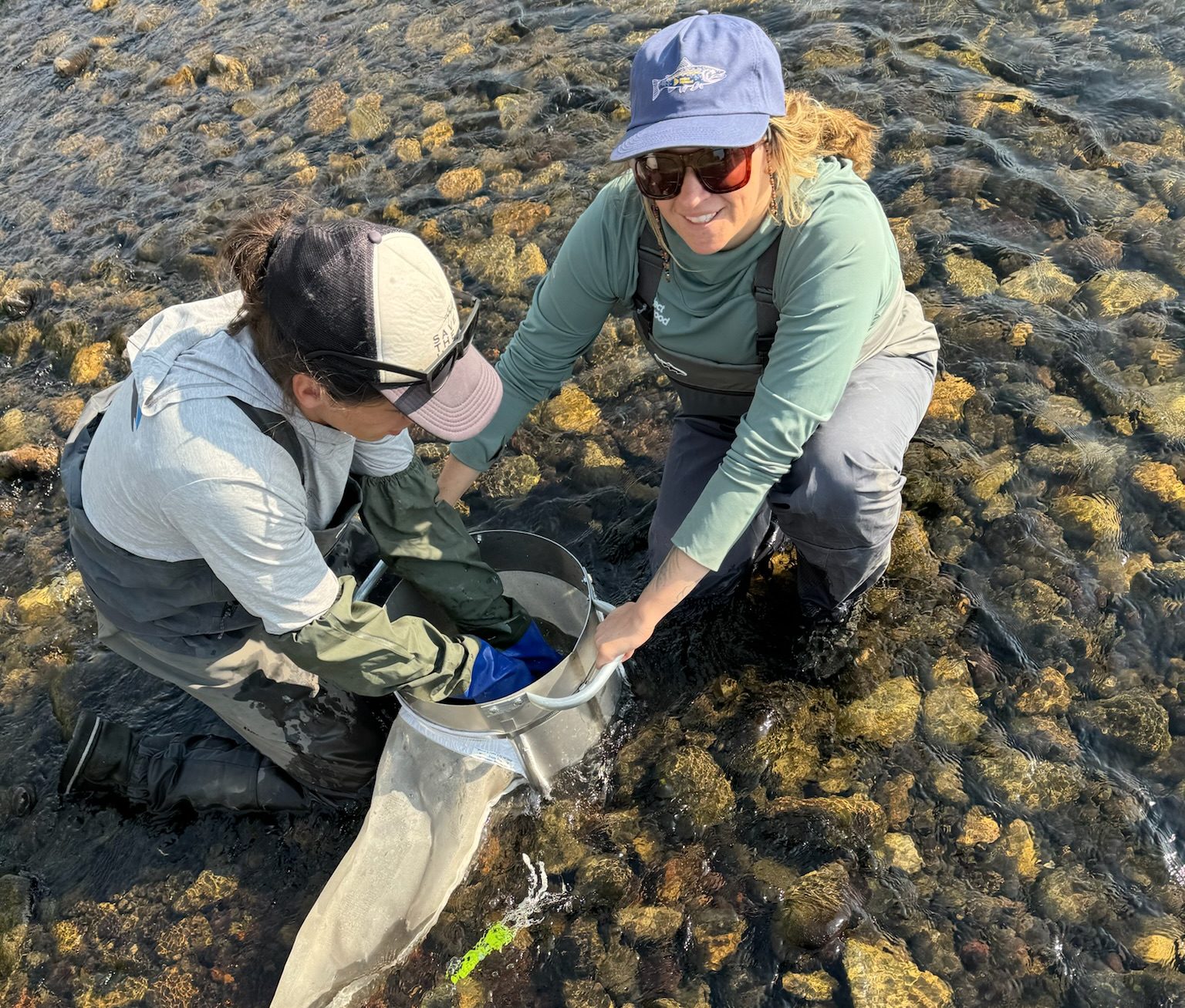 Big Wood River, ID FieldworkYear three of our monitoring project on the Big Wood River, Idaho, was a massive success! The Big Wood is a fantastic watershed in the heart of Idaho, but historically, relatively little long-term information has been available on its aquatic insect communities. Our goal is to help change that by building a consistent dataset with Project Big Wood that can track the health of the river and its bugs over time. Big Wood River, ID FieldworkYear three of our monitoring project on the Big Wood River, Idaho, was a massive success! The Big Wood is a fantastic watershed in the heart of Idaho, but historically, relatively little long-term information has been available on its aquatic insect communities. Our goal is to help change that by building a consistent dataset with Project Big Wood that can track the health of the river and its bugs over time.So far, results from 2024 and 2025 generally indicate good water quality across most of the watershed, although the lower Big Wood and some tributaries, including lower Trail Creek, show signs of degradation. Perhaps the greatest long-term challenge facing the river, however, is water quantity. Over the past 20 years, summer flows on the Big Wood have declined by a little over 20%. This year brought another exceptionally dry summer, with flows below Magic Reservoir dropping to some of the lowest levels on record. In the face of increasingly difficult water years and continued human development in the Wood River Valley, maintaining enough water in the river may be one of the most important challenges for the Big Wood moving forward. That makes long-term monitoring increasingly valuable. We are excited for these trend data to help guide Project Big Wood’s conservation and restoration efforts, which include projects focused on improving fish passage, reconnecting floodplains, restoring natural channel processes, reducing erosion, and conserving water. We look forward to generating more trend data over time to show how the Big Wood’s insect community responds as river conditions change. And, after this year, we are definitely hoping for a much better snowpack this winter! This was also our third year hosting Bugs and Brews at Sawtooth Brewery in Hailey. More than 50 members of the community came out to participate in a raffle, tie flies, and listen to Executive Director, Jackson Birrell’s, presentation about our Big Wood River Project. The Q&A is always one of our favorite parts of these events, and this year we had more questions than ever. We loved seeing the curiosity and passion everyone brought to the conversation! A huge thank you to Project Big Wood for continuing to collaborate with us on this project and event, and to Sawtooth Brewery for once again hosting Bugs and Brews!Wretched Mess Fest in West Yellowstone, MT 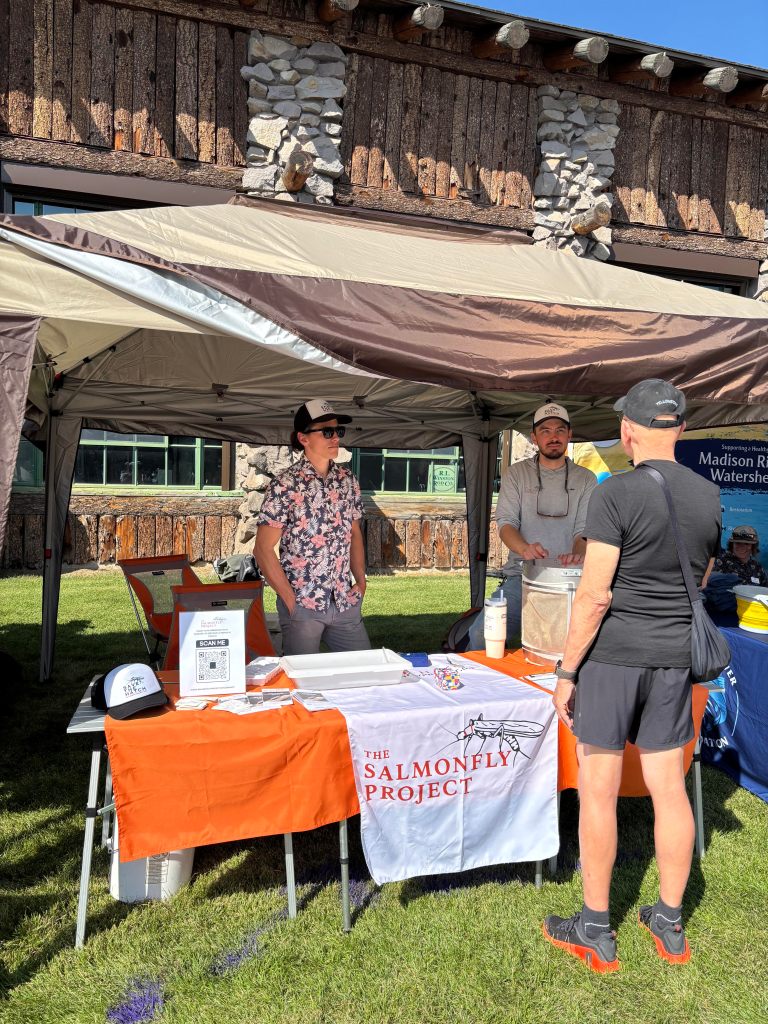 Wretched Mess Fest returned for its second year in West Yellowstone, Montana, and we were lucky enough to participate! If you’ve never heard of The Mess, it’s a fly fishing festival that brings together businesses, nonprofits, guides, anglers, and other members of the fly fishing community for a weekend of casting competitions, presentations, fly tying, vendor booths, and live music. It happens every September, and we highly recommend making it out! Wretched Mess Fest returned for its second year in West Yellowstone, Montana, and we were lucky enough to participate! If you’ve never heard of The Mess, it’s a fly fishing festival that brings together businesses, nonprofits, guides, anglers, and other members of the fly fishing community for a weekend of casting competitions, presentations, fly tying, vendor booths, and live music. It happens every September, and we highly recommend making it out!This year, we hosted a booth where we had the chance to meet many of you, talk bugs, and share more about The Salmonfly Project’s mission. Executive Director, Jackson Birrell, also gave a talk on aquatic insect trends, highlighting results from three ongoing projects: our global survey of anglers about observed insect trends, long-term aquatic insect data from the Madison River, and our collaborative work with the Henry’s Fork Foundation to better understand adult PMD hatches on the Henry’s Fork. Major kudos to Chief Operating Officer, James Frakes, for preparing all the data used in the presentation. Missed the presentation? Here are a few of the major takeaways: Global angler survey: The majority of the 400 experienced fly anglers who completed our survey reported personally observing declines in aquatic insect hatches on the waters they fish most often. Mayflies and stoneflies were the groups most consistently reported as declining. These observations are not a substitute for empirical monitoring data, but they raise an important red flag and highlight the need for scientists to quantify what is actually changing.Madison River: Despite widespread reports from some anglers of major insect declines on the Madison, our analysis tells a more nuanced story. Since 1999, the majority of mayflies, stoneflies, and caddisflies in the available long-term dataset have been stable. Salmonflies and golden stoneflies are the clearest exceptions, with declining trends at many sites. Our next step is to examine the environmental factors that may be driving these different patterns among taxa.Henry’s Fork: Long-term data from the Henry’s Fork Foundation indicate that PMDs have moderately declined across the Henry’s Fork, while many anglers report much more dramatic losses – even disappearances – in important reaches, including the Ranch. Our collaborative project with HFF is piloting new methods for monitoring adult PMD hatches so we can better understand where, when, and how strongly these hatches are occurring. We’re excited to expand this work into a larger monitoring effort soon.A huge thank you toBig Sky Anglers for organizing Wretched Mess Fest and inviting us to participate. We had a fantastic time and can’t wait to be back next year!Teton River, ID and World Fly Fishing Championships |
 We wrapped up our fourth season of aquatic insect monitoring on the Teton River in collaboration withTeton Valley Trout Unlimited! This year, we expanded our work in Teton River Canyon, sampling aquatic insects at seven sites throughout this spectacular section of river. We wrapped up our fourth season of aquatic insect monitoring on the Teton River in collaboration withTeton Valley Trout Unlimited! This year, we expanded our work in Teton River Canyon, sampling aquatic insects at seven sites throughout this spectacular section of river.This work is especially timely given renewed discussions about future water-storage in the Upper Snake River Basin, including the possibility of rebuilding Teton Dam. The original Teton Dam catastrophically failed on June 5, 1976, during its first filling. For the Teton River ecosystem, converting the canyon from a flowing river into a reservoir would represent a massive change in habitat Most of the resident hatches depend on flowing-water to survive and would be lost if flooding occurs. That would represent a massive loss in biodiversity and opportunity for anglers to fish hatches, as well as a change in food availability for trout, like the Teton River’s native Yellowstone cutthroat. That is exactly why we are doing this work now. Our project is establishing the first quantitative baseline of aquatic insect communities throughout Teton Canyon, Ultimately, these data will allow us to estimate how the abundance and composition of aquatic insects—and the food available to trout—could change if the canyon were converted from a river to reservoir. We hope this information provides decision-makers and the public with a much clearer picture of what is biologically at stake as future water-storage options are evaluated. A huge thank you to all of the volunteers who came out and helped us collect samples this season! While we were in eastern Idaho, we were also invited to speak during the opening night of the World Fly Fishing Championships in Idaho Falls. It was incredible to see pro anglers representing 21 countries come together for the event. Executive Director, Jackson Birrell, joined a panel of conservation organizations to discuss the role conservation plays in protecting the fisheries and aquatic ecosystems that make fly fishing possible. The following morning, competitors headed out for a full week of competition. At the end of the event, Team USA took home gold. Congratulations to all of the anglers who participated! Want to follow the Teton Dam discussion? The Idaho Water Resource Board is currently involved in the Upper Snake River Basin Study, which is evaluating future water-supply and storage strategies. Information on the Board, upcoming meetings, meeting materials, and opportunities for public participation is available through the Idaho Department of Water Resources. |
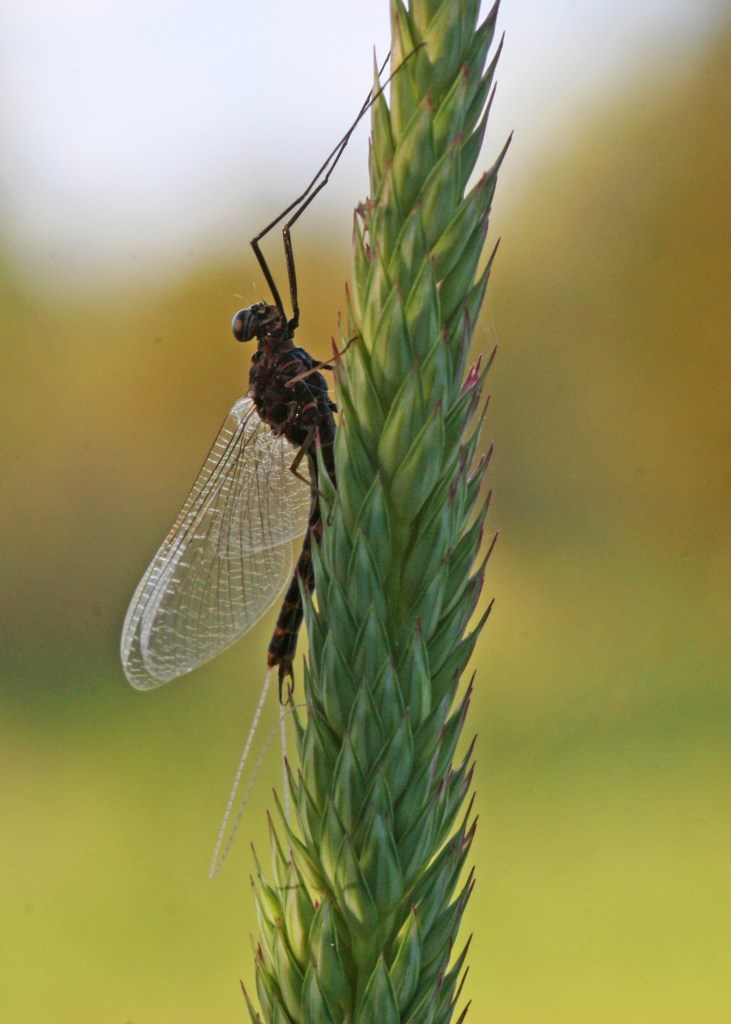
Upper Snake River, WY Fieldwork Year four of aquatic insect monitoring has been completed on the Upper Snake River in Wyoming! This is one of the most beautiful rivers we get to work on—there is nothing quite like sampling beneath the Tetons as the landscape shifts into its autumn colors. Year four of aquatic insect monitoring has been completed on the Upper Snake River in Wyoming! This is one of the most beautiful rivers we get to work on—there is nothing quite like sampling beneath the Tetons as the landscape shifts into its autumn colors.We feel incredibly lucky to continue this project in collaboration with Jackson Hole Trout Unlimited. This season, we surveyed aquatic insects at six sites along the Snake, ranging from above Jackson Lake to Palisades Reservoir. Our long-term goal is to establish a modern baseline for aquatic insect communities throughout the Upper Snake while tracking changes in insect abundance and diversity and water quality over time. Long-term monitoring is particularly important on a highly managed river like the Snake. Each fall, flows below Jackson Lake Dam are reduced substantially as the river transitions from summer to winter operations. These ramp-downs can strand fish and aquatic insects in disconnected or rapidly dewatered habitats, and understanding their ecological effects remains an important management issue on the Upper Snake. Combined with increasingly hot and dry summers, these changing flow conditions make continued insect monitoring especially valuable. We were also invited to present recent findings from this ongoing project at JD High Country Outfitters in Jackson. Results on the Snake are hopeful, showing evidence of high water quality and abundant aquatic insects, stressing the importance of preserving and protecting this important resource from further degradation. We had a great turnout, including many familiar faces who have supported this work over the past several years. We always appreciate the opportunity to share what we are learning and are incredibly grateful for the support of our Teton-area community!Wild Fish Slow Food Film Festival in Jackson, WYNew film on The Salmonfly Project incoming! Join Slow Food in the Tetons and Trout Unlimited for a special film festival on October 2nd at 5:30 PM, presented by Loop Tackle and Cox Outdoors that explores the connections between water, fish, community-led conservation, and sustainable foodways. The first half will include local and regional films from the Upper Snake River Basin, from the Snake River Headwaters to the Lower 4 Snake River dams. The second half will feature dam removals in the Klamath River, Atlantic salmon conservation in Iceland, the fight against the Pebble Mine, and indigenous conservation leadership. The family-friendly evening will conclude with a panel discussion of local, regional, and national conservation and food sustainability changemakers. Come for the films and stay for the raffles, swag giveaways, partner booths, children’s book signing, and food tastings! The event include a new film showcasing the collaborative work of The Salmonfly Project and Henry’s Fork Foundation, “Chasing Hatches”. This will be the first sneakpeak of the film, so don’t miss it if you’re in town! More about “Chasing Hatches”— On one of the West’s most iconic rivers, generations of angler observations collide with data-driven science as the Henry’s Fork Foundation and Salmonfly Project work to understand a changing river, and what it will take to protect it for the future. Aquatic insects are the foundation of river ecosystems, yet remarkably little long-term data exists about their populations. Without understanding what’s happening at the bottom of the food web, we risk missing the earliest warning signs of ecological change. Chasing Hatches is a film about the people racing to close that gap, legacy science, new technology, and the anglers, researchers, and rivers caught in between. If the hatches disappear, what does that mean for fly fishing? Jackson premiere! Big thanks to Fish Camp for shooting and producing this awesome film! And for Henry’s Fork Foundation for collaborating on it and Jackson Hole Trout Unlimited for putting it on.Useless Bug Facts! 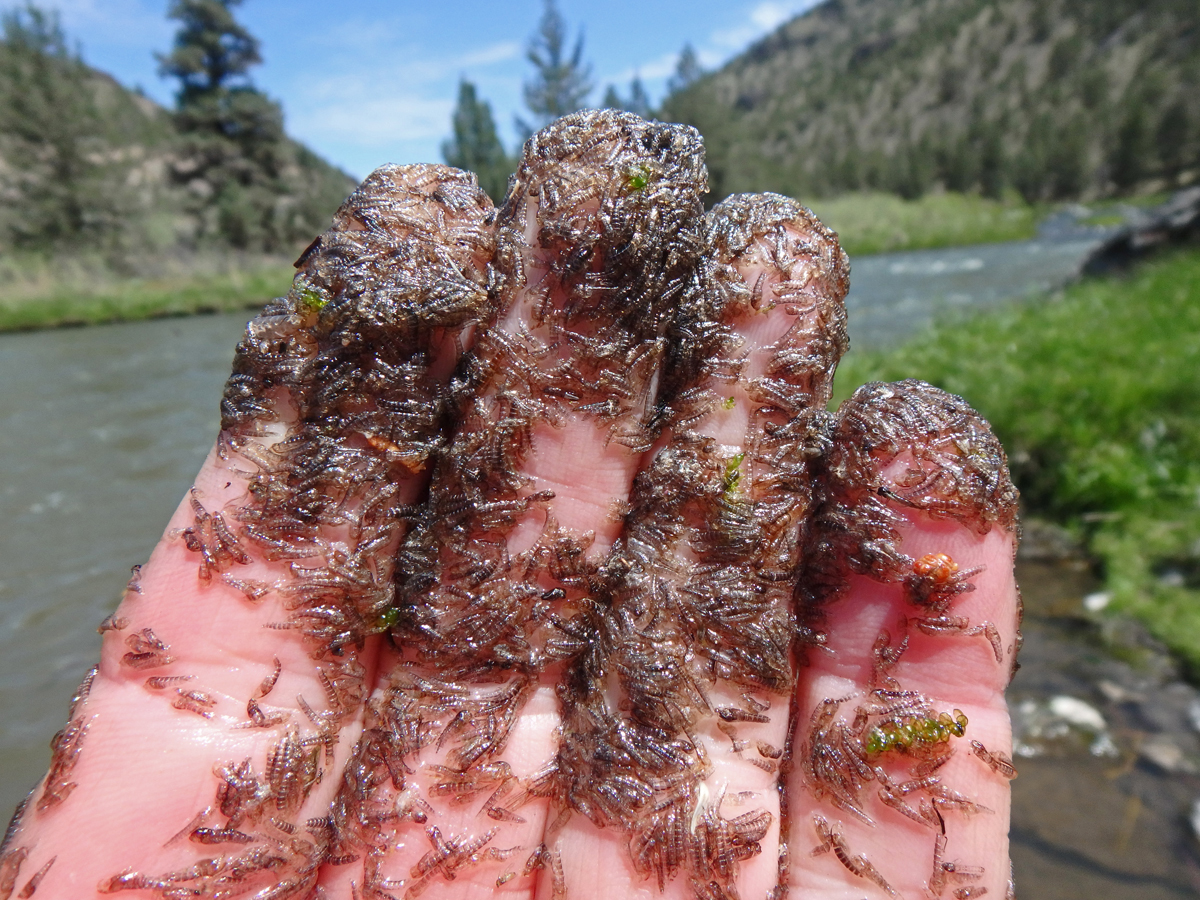 At The Salmonfly Project, we teach anglers entomology to help them better match hatches. However, there are so many amazing things to learn about aquatic insects that have limited – to absolutely zero – practical applications in fly fishing. In this reoccurring column, we share fascinating information about the physiology, ecology, and behavior of aquatic insects just for kicks! Useless? Probably. Interesting? Absolutely! At The Salmonfly Project, we teach anglers entomology to help them better match hatches. However, there are so many amazing things to learn about aquatic insects that have limited – to absolutely zero – practical applications in fly fishing. In this reoccurring column, we share fascinating information about the physiology, ecology, and behavior of aquatic insects just for kicks! Useless? Probably. Interesting? Absolutely!Hotter Water, Smaller Bugs? Anglers love to talk about how hatches change from year to year. This year, across much of the West, one of the common observations was that everything seemed early—hatches that normally show up in July were popping in June, and familiar hatch calendars suddenly felt a little less familiar. Water temperature is one of the major controls on aquatic-insect development, so warmer seasons speed up the clock and push emergence earlier. But temperature doesn’t just influence when a bug hatches. It can also influence how big the adult insects get.There is a wonderfully simple name for this phenomenon: the temperature-size rule. Across a huge variety of ectotherms—the animals we usually call “cold-blooded”—individuals raised at warmer temperatures mature at smaller body sizes than members of the same species raised in cooler conditions. A classic review of aquatic ectotherms found this response in 55 of 61 studies. It isn’t quite universal (is anything in ecology?), but it is one of the most widespread patterns in ectotherm biology. At first, larger bodies in the heat can sound backwards. Warm water generally makes an aquatic insect’s metabolism run faster, so shouldn’t a warm-water nymph grow bigger? The trick is that growth and development aren’t quite the same thing. As temperature rises, an insect may grow faster, but its developmental clock can speed up even faster. It races through its juvenile life, reaches metamorphosis sooner, and effectively runs out of growing time. The end result can be an adult that hatches early—but relatively small. This has important repercussions for anglers. Many western streams and rivers have warmed over recent decades, although the amount varies from watershed to watershed. As that warming continues, the temperature-size rule gives us good biological reason to expect smaller adults in at least some aquatic-insect populations. So if you’ve spent decades fishing the same river and find yourself thinking, “I swear these PMDs used to be bigger,” you might not be imagining things. That doesn’t mean every #16 hatch is destined to become a #18—food availability, flow, oxygen, genetics, and population density can all influence final body size too. But warmer water can absolutely push aquatic insects toward smaller adults. In other words, climate isn’t just capable of changing when you need that mayfly box. It may eventually change the size of the fly you tie on. Photo credit: Brian O’Keefe.Salmonfly Project MembershipsDid you know that when you donate to The Salmonfly Project you become a member? We have 6 tiers of membership levels, each with their own unique membership benefits. Every contribution directly advances our conservation programs. Donate today at salmonflyproject.org/donate.Become a MemberThank you.We recognize that it is through the kindness and generosity of supporters like you that we can continue making a positive impact on our precious streams and rivers. Thank you for your partnership – together, we can save the hatch! Sincerely,Jackson Birrell & James Frakes – Co-Founders   |