

| October NewsletterTo our friends and community,We have officially wrapped up our 2026 field season, which started in March and finished just this month! We have wor on 15 different rivers, collecting data and meeting many of you. We are so grateful for all of our collaborators, donors, and volunteers who made all of this possible. Now is the time for us to process the jars and jars of insects we have collected, analyze the data, and write up the reports. These reports are public and available on our reports page on our website. This month, SFP worked on Ogden River in Utah, finished up a report from our Colorado River surveys, and submitted the results of our angler survey for scientific publication We also released a new documentary, “Chasing Hatches”, about our ongoing project with The Henry’s Fork Foundation made by FishCamp Collective. It will be available to view on Fly Fusion Magazine’s Trout Tour throughout the next couple of months. Scroll down to see when and where it will be showing and purchase your tickets! It is an amazing film, and we are so proud to be a part of it. We also welcome you to our third quarterly member webinar on November 17th at 6 PM. We were unable to follow our quarterly schedule due to being out in the field, so we hope to see you all there to talk about salmonfly trends in the Upper Colorado River Basin. None of our work would be possible without the generous support from our community – you! Your contributions are essential to our mission of protecting aquatic insects, ensuring vibrant hatches, and safeguarding rivers and streams for generations to come. Interesting in contributing?We have a goal of raising $20,000 from new and renewed memberships between now and the end of the year to support our science and conservation work in 2027. If you are able to give, we would deeply appreciate your generosity! Already a member, but know a friend that loves hatches? Consider forwarding our newsletter to them! Donate today!October Highlights 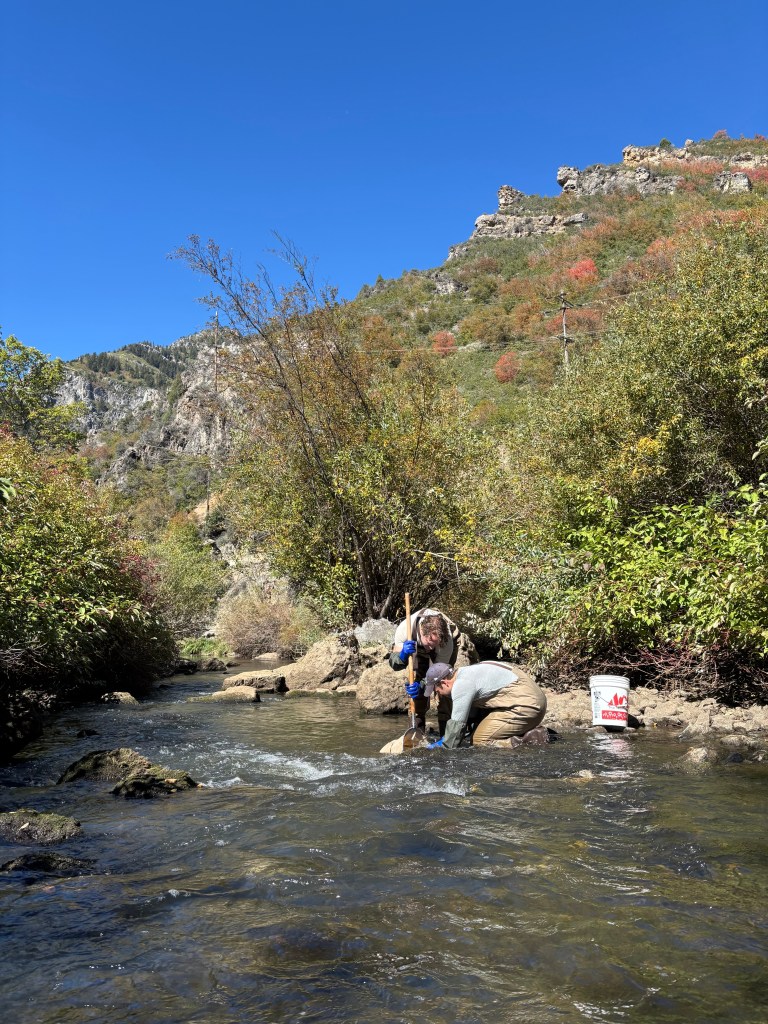 Ogden River, UT FieldworkOur last field project of the year was in the Ogden River Basin in Northern Utah in collaboration with Utah Trout Unlimited. Although this watershed is small, it has an interesting history regarding its aquatic insect population, particularly salmonflies. Many local anglers have reported declines of salmonflies on the Ogden River and Ogden South Fork over the last 20 years, and some believed that they had been completely extirpated. In 2024 and 2025, we sampled the entire aquatic insect community and found healthy insect populations at most sites. To our surprise, we also found abundant salmonfly nymphs! However, the vast majority of nymphs were very small – only one to two years old. Very few large nymphs from older age classes were detected. Remember, salmonflies are laid as eggs in early summer and then exist as nymphs in the river for about four years before hatching as adults. Our hypothesis is that excellent water years in 2023 and 2024 led to the high survival of salmonfly eggs and young nymphs during that timeframe. Now, we’re revisiting the Ogden every year to track the survival of the nymphs and study the factors that drive nymph survival. Each year we come back, the salmonflies are larger – but still we detect few salmonflies from other age classes – just those laid in 2022 and 2023. We’ll continue to monitor these populations until they emerge over the next few years. If you’d like to learn more, read the report here from our first year of sampling. Big thanks to Utah Trout Unlimited and Utah Department of Environmental Quality for making this project possible.”Chasing Hatches” and Where to Watch it 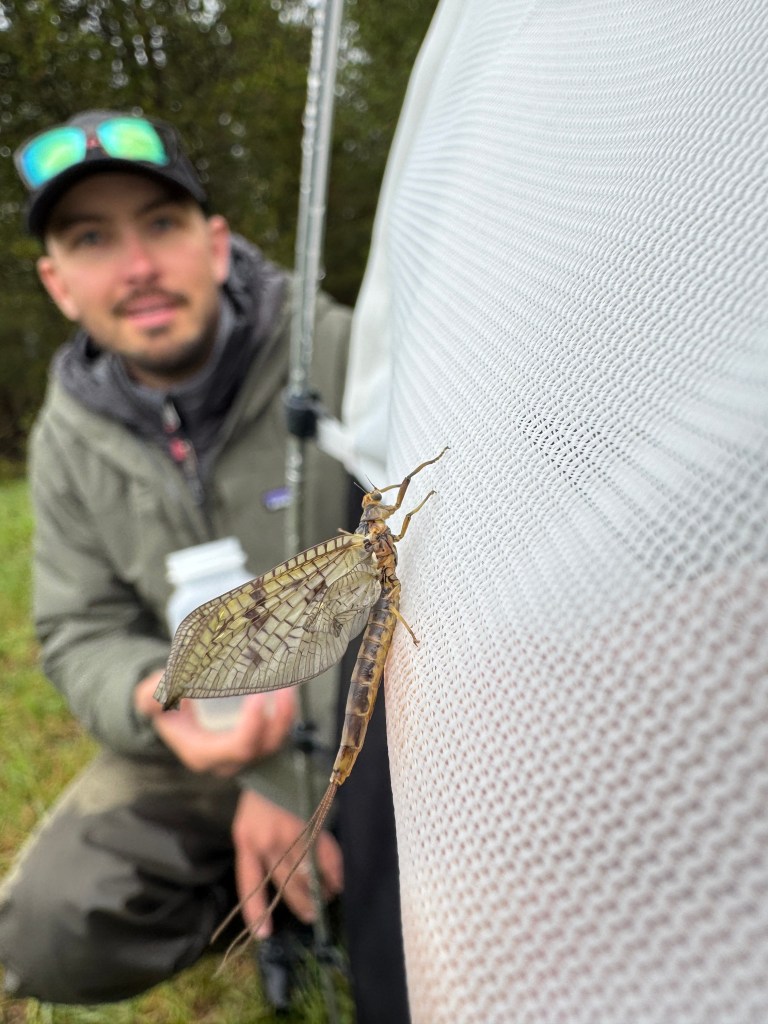 “Chasing Hatches” is a new film by FishCamp Collective, presented by The Henry’s Fork Foundation and The Salmonfly Project, with support by Simms Fishing. NOW SHOWING at this year’s 2026 Fly Fusion Magazine Trout Tour! On one of the West’s most iconic rivers, generations of angler observations collide with data-driven science as The Henry’s Fork Foundation and The Salmonfly Project work to understand a changing river, and what it will take to protect it for the future. “Chasing Hatches” follows that generational handoff in three movements. It begins with the legacy and science that Dr. Rob Van Kirk of The Henry’s Fork Foundation has built. It moves to the next generation, following Dr. Jackson Birrell and James Frakes of The Salmonfly Project as they travel across the West assembling one of the largest aquatic insect datasets ever collected, driven by a simple conviction: if you protect the bugs, you protect everything. And it arrives at the future, where eDNA researcher Dr. Jack McLaren bridges field science and the lab, chasing the possibility that river water samples might reveal the health of an entire ecosystem and let us quantify what’s changing before it becomes a lasting decline. Aquatic insects are the foundation of river ecosystems, yet remarkably little long-term data exists about their populations. Without understanding what’s happening at the bottom of the food web, we risk missing the earliest warning signs of ecological change. “Chasing Hatches” is a film about the people racing to close that gap, along with the legacy, science, technology, anglers, researchers, and rivers caught in between. If the hatches disappear, what does that mean for fly fishing? Director/Producer: Jon KlaczkiewiczCinematography: Jon Riley, Anthony Swentosky, Seth OgdenEditor: Matthew Casperson Where can I watch “Chasing Hatches”? November 4th – Medford, ORCommon Block Brewing, 6PMBuy Tickets November 20th – Bend, OR10 Barrel Brewing, 6 PMBuy Tickets November 21st – Prince George, BCCanfor Theater, 7 PMBuy Tickets December 4th – Kimberley, BCCentre 64, 7 PMBuy Tickets December 8th – Portland, ORClinton Street Theater, 6 PMBuy Tickets December 12th – Cranbrook, BCStudio Stage Door, 7 PMBuy Tickets December 12th – Fernie, BCThe Vogue Theater, 7 PMBuy Tickets After Chasing Hatches airs in these locations with Fly Fusion, we’ll provide more opportunities to see it next year! Stay tuned for more!Colorado River Survey and Results |
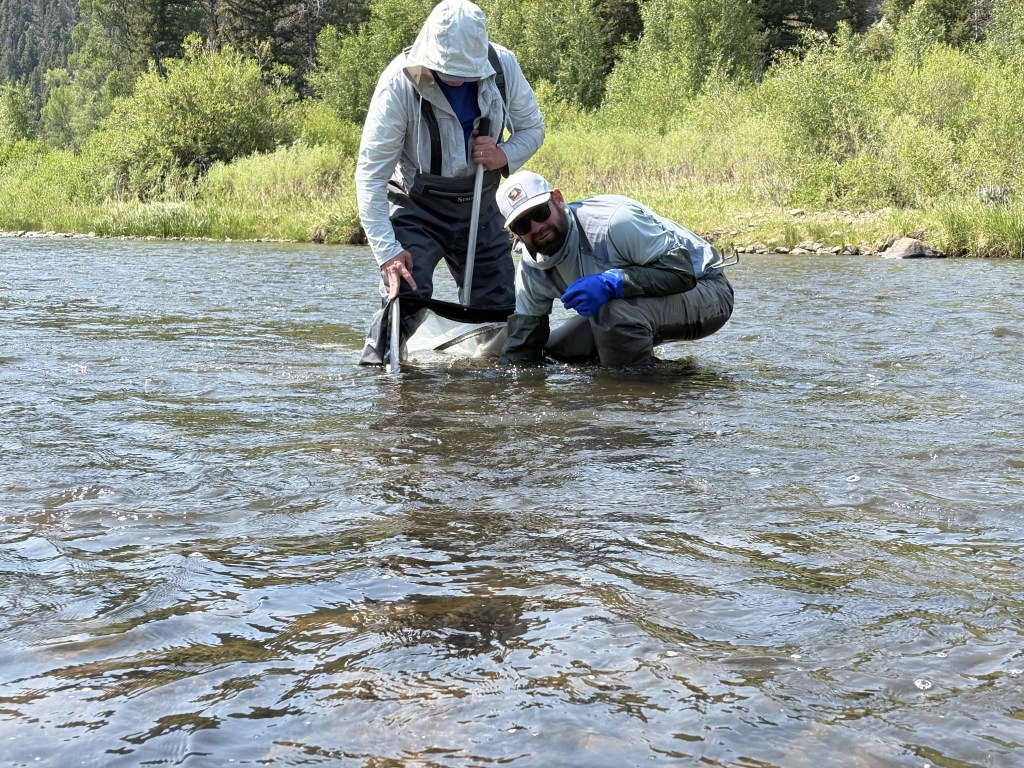 Did you know that giant salmonflies are now listed as a Species of Greatest Conservation Need in Colorado?In 2024, Colorado expanded its wildlife conservation authority to include insects, opening the door for greater attention to species like the giant salmonfly. But despite their newly assigned conservation ranking, we still know surprisingly little about their current distribution, abundance, and long-term trends in Colorado. We’re working now watershed by watershed to better understand the status of salmonflies across Colorado. We’ve just completed our first assessment on the Upper Colorado River, thanks to Colorado Trout Unlimited and the generous support and partnership of the Colorado Headwaters and Gore Range Anglers chapters of Trout Unlimited! What did we find? Although salmonflies are relatively abundant in much of the Upper Colorado, results indicate substantial but spatially variable declines. The strongest remaining salmonfly populations occur immediately below Byers Canyon, where they appear stable, and below Gore Canyon, where we found salmonflies to be in decline by 98% over the last 17 years. Several other historically productive reaches have also experienced salmonfly reductions. Near Kremmling, contemporary monitoring efforts and targeted 2026 sampling failed to detect salmonflies in reaches where they were historically present, suggesting a potential local extirpation. At Kemp Breeze, contemporary densities are less than 8% of historical averages. Upstream of Byers Canyon, densities have continued to decline from an average of over 300 individuals/m² in the 1980s to approximately 60 individuals/m² in the 2010s to a modern baseline of only 2 individuals/m². These are sobering results and add one more location to the map where we now know salmonflies are threatened. We’re now proposing an Upper Colorado Salmonfly Watch that would bring together existing monitoring programs and establish targeted new monitoring locations to track populations over time. We’re also working to expand these assessments into other Colorado watersheds to build a clearer picture of statewide salmonfly population trends. Passionate about hatches on the Upper Colorado? Consider making a donation to SFP today to help us expand our research and conservation efforts on this important River. Want to dive more into the findings on this project? Our full report will drop early next week at salmonflyproject.org/results. |
Belated Quarter 3 Webinar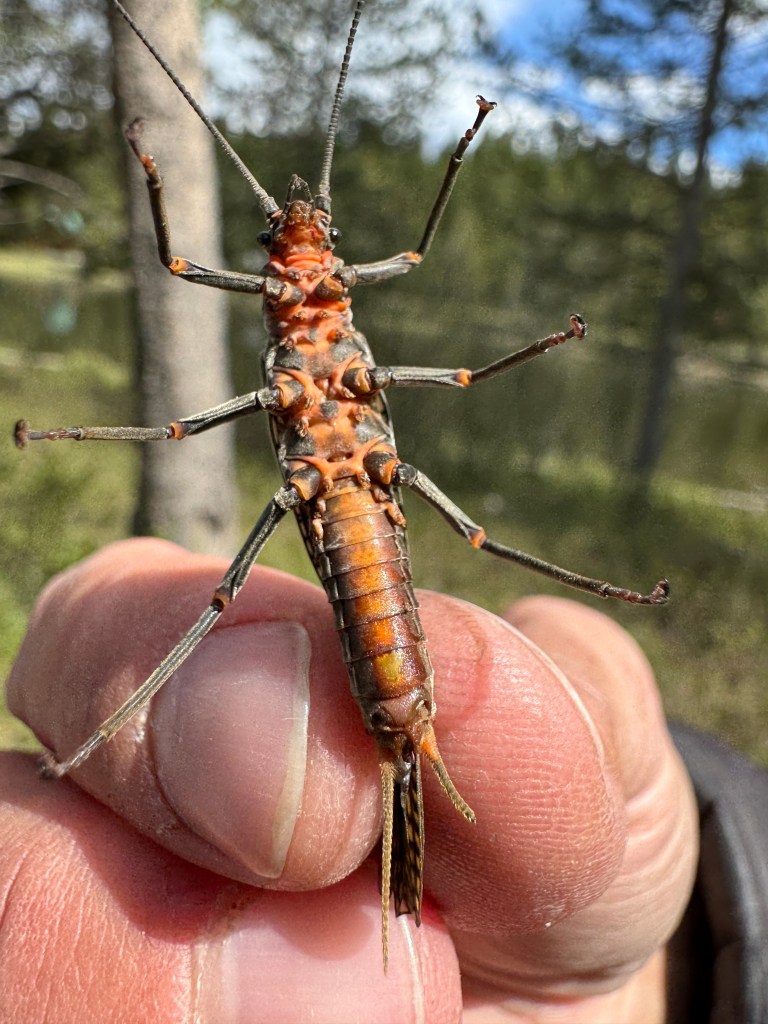 One of our favorite ways to interact with our members is through our quarterly webinars. Our third webinar of the year had to be postponed because of the absolute madness of field season. We are excited to see all of you on November 17th at 6 PM to hear co-founder, James Frakes, present about salmonfly trends on the Upper Colorado River Basin. This webinar is open to the public, but only members are automatically entered into our Giveaway. This month we will be giving away a Patagonia XL Duffel Bag. A link to the Zoom meeting will be sent out before the webinar, so keep an eye out for that email. We can’t wait to see you all there and answer any questions you may have.Useless Bug Facts! 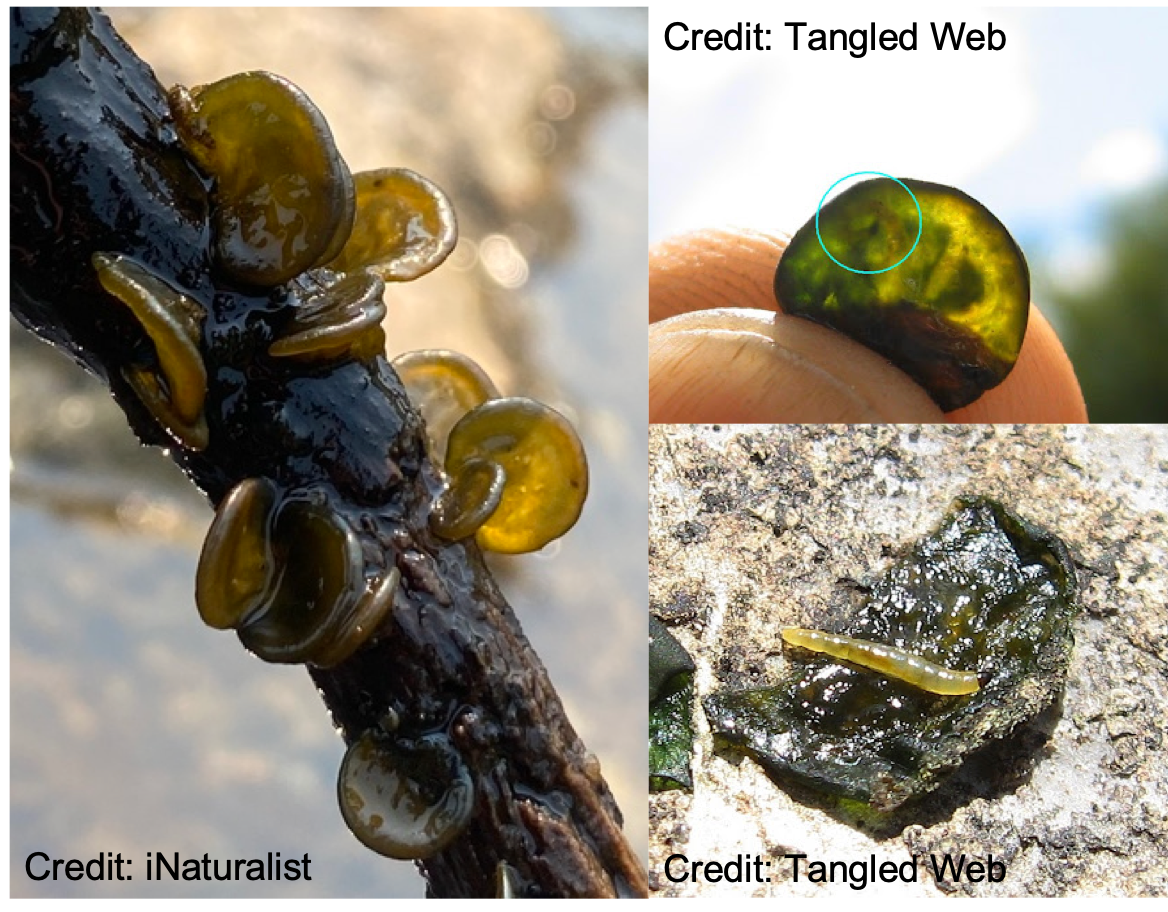 At The Salmonfly Project, we teach anglers entomology to help them better match hatches. However, there are so many amazing things to learn about aquatic insects that have limited – to absolutely zero – practical applications in fly fishing. In this reoccurring column, we share fascinating information about the physiology, ecology, and behavior of aquatic insects just for kicks! Useless? Probably. Interesting? Absolutely! Have you ever noticed little green, jelly-like balls attached to rocks in your favorite trout stream? Some of these are colonies of Nostoc, a group of photosynthetic bacteria commonly called blue-green algae or Cyanobacteria. And some of these colonies have a rather unusual tenant: a tiny midge living inside them. Two species of midges, Cricotopus nostocicola and C. fuscatus, are known to live inside colonies of Nostoc (N. parmelioides in particular). Like many kinds of caddis, midge females can also dive underwater to lay their eggs, and they’re thought to lay their eggs directly on the Nostoc during their underwater dives. After hatching, the baby midge larvae burrow inside, feeding on the Nostoc tissue while enjoying protection from predators. This food source is especially beneficial for the midges, as Nostoc have a natural, rare ability to fix atmospheric nitrogen into biologically useful forms. This means that the midges aren’t just consuming calories from the Nostoc, but the nutrients needed for growth. This is especially important in nutrient-poor streams. Even more incredibly, the midges also change the Nostoc homes they’re living inside. Without a midge, Nostoc typically forms a small, round ball less than 5 mm across. With a midge, the colony develops into a much larger, upright, ear-shaped structure, sometimes reaching 2 cm across! The larvae also help anchor the colony more securely to rocks. These changes can benefit the cyanobacteria by exposing them to more light and flowing water, improving gas exchange and, under certain conditions, photosynthesis. It’s an unusual example of mutualism: the midge gets food and shelter, while its host benefits from the midges ‘renovations’. However, these tenants aren’t particularly friendly to roommates. Young larvae sometimes share colonies, but by their final larval stage, there’s generally only one occupant per Nostoc. Scientists discovered why when they experimentally placed two mature larvae together in a single Nostoc colony. The midges attacked each other with their mandibles, and in all five trials, at least one was dead within 24 hours! For the survivor, this means a life of plentiful food. When fully developed, the midge eventually transforms into an adult inside the Nostoc (i.e., pupation) and swims to the surface to mate and reproduce. During this process, the surrounding Nostoc becomes soft and cotton-like, potentially making adult emergence easier. At roughly the same time, the Nostoc produces tiny reproductive filaments called hormogonia, which can disperse and establish new Nostoc colonies. Thus, even the reproductive cycles of these two amazing organisms are tied together, helping this mutualistic cycle to continue again and again. So, next time you’re turning over rocks looking for mayflies, stoneflies, and caddis, keep an eye out for those little green blobs and disks. You might be looking at a tiny home, a food supply, a construction project, and the scene of a rather violent turf war—all rolled into one.Salmonfly Project MembershipsDid you know that when you donate to The Salmonfly Project you become a member? We have 6 tiers of membership levels, each with their own unique membership benefits. Every contribution directly advances our conservation programs. Donate today at salmonflyproject.org/donate.Become a MemberThank you.We recognize that it is through the kindness and generosity of supporters like you that we can continue making a positive impact on our precious streams and rivers. Thank you for your partnership – together, we can save the hatch! Sincerely,Jackson Birrell & James Frakes – Co-Founders   Unsubscribe | Manage your subscription PO Box 216 Missoula, MT 59806 conservation@salmonflyproject.org |