
- BRETT FRENCH
- Mar 14, 2026
- 0
×
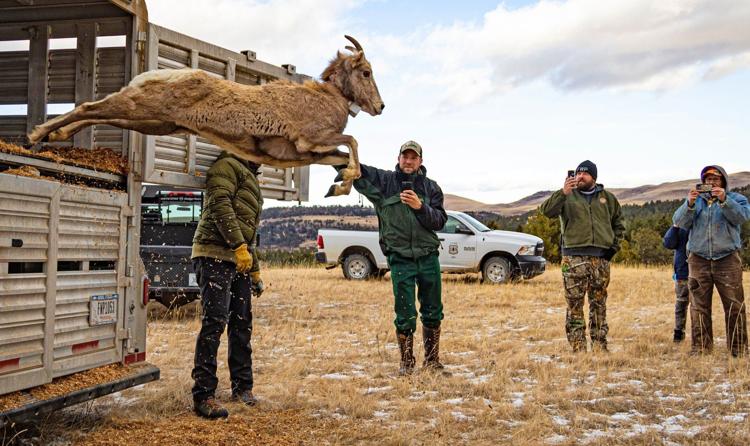
A bighorn ewe springs from a specially made trailer used for bighorn sheep transfers. The sheep were released along the South Fork of the Judith River in the Helena-Lewis and Clark National Forest in 2021.Morgan Jacobsen photos, FWP
Twenty to 50 bighorn sheep could be moving north in the Madison Valley if Montana Fish, Wildlife & Parks’ proposal to expand the animals’ range is approved.
The plan is one of several items on the Montana Fish and Wildlife Commission’s April 16 agenda. Public comment will be taken on the topic through March 29. Previously received remarks have been generally supportive of the work.
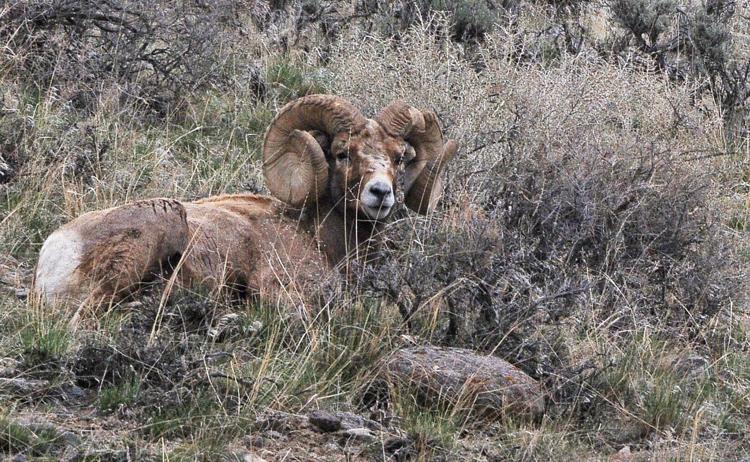
The bighorn sheep would be trapped at the southern end of the valley where a herd of about 200 occupies the Taylor-Hilgard portion of the Madison Range in Hunting District 302 near Quake Lake.
To capture the sheep, FWP would use bait stations in the winter to lure bighorn sheep into an area where they would be caught with a drop net. All of the transferred animals would be fitted with a GPS collar. Rams more than 4 years old would not be moved out of fear they may harm other animals in the trailer.
Off to Bear Creek
From there, the sheep would be trucked about 20 miles north for release on the Bear Creek Wildlife Management Area — an unoccupied, high-quality winter range that FWP has deemed suitable for the animals. The area already is winter habitat for 500 to 1,000 elk and 100 to 200 mule deer.
FWP is proposing to move no more than 150 bighorns over a period that could stretch across 10 years.
Madison Mountain bighorn sheep transfer environmental assessment
The project would translocate, over the course of 10 years, 50 to 100 bighorn sheep to a historic but unoccupied winter range in the center of the Madison Mountain Range.
In addition to expanding habitat for bighorn sheep in the Madison Mountains, the transfers would also keep the Taylor-Hilgard population at levels within the carrying capacity of the landscape. Although the herd can grow above 200 animals, in a severe winter the habitat may only sustain 100 to 125 sheep, FWP said.
“Maintaining this herd within or below the carrying capacity indicated by severe winters can prevent catastrophic disease-related and starvation-related die-offs,” FWP wrote in its EA.
Repopulating the range
Bighorn sheep haven’t occupied this central region of the Madison Range, roughly due east of the community of Cameron, since the 1980s.
“Bighorn sheep were extirpated from the center of the Madison Range, as well as the Henry’s Mountains to the south of the study area, likely due to disease epidemics which occurred from the 1960s-1990s,” FWP noted in its environmental assessment.
Still surviving to the north of the Bear Creek WMA is another bighorn herd that lives in the Spanish Peaks. Although miles from the Taylor-Hilgard herd, FWP considers the two bands genetically related albeit geographically isolated since the 1980s.
“Bighorns have not recolonized the central Madison Mountain Range themselves, likely because bighorn sheep use social transmission to pass down acquired information about habitat use and migration,” FWP wrote.

Disease worries
Although concerns about moving sheep possibly infected with deadly pneumonia is always a concern, FWP said the problem should be lessened by the fact that the source herd is local, reducing the chances of a new disease being introduced. In addition, no domestic sheep or goats, which are known to carry bacteria that can infect bighorns, are present near the Bear Creek WMA.
The biggest threat to other wildlife from the relocation project is to existing mountain goat populations in the region, but with the source bighorn herd being local FWP determined that concerns for introducing new diseases were less likely.
Nonetheless, disease is always top of mind for the agency as pneumonia infections have repeatedly depleted herds across the state. The most recent outbreak wiped out a herd in the Missouri Breaks last year. Traced to a new bacteria, the herd in Hunting District 622 plummeted from more than 300 animals in 2016 to a few rams.

Round 2 for the Madison
This would be the second time FWP has attempted to spread bighorn sheep out along the Madison Range between the existing herds in the Spanish Peaks and Taylor-Hilgard region.
Between 2013 and 2018 FWP used three transfers of 97 animals from the Taylor-Hilgard bighorn population in an attempt to establish a population at Wolf Creek, about 14 miles north.
However, because they weren’t far from their home herd, many of the animals drifted back while a few moved to nearby herds in the Gallatin Range, near Moose Creek and the Spanish Peaks.
Despite that setback, the Madison Range has the potential to provide a home to 780 to 1,730 bighorn sheep, according to FWP’s habitat modeling. Right now only about 400 inhabit the region and utilize only a portion of the available habitat.
Good news for hunters?
Bighorn sheep remain one of the most difficult to draw hunting tags in Montana. Expanding their habitat could therefore benefit hunters, FWP suggested.
“Increasing bighorn sheep numbers and distribution within southwest Montana is important for the long-term survival of the species and would also provide a valuable hunting opportunity to the public of Montana,” FWP noted. “More than 3,400 hunters applied for the chance at one of the limited 15 bighorn sheep licenses in Region 3 in 2023.”
In surrounding Madison County, FWP wrote that hunting generated $23 million in revenue in 2016, the second-highest county in the state.
Maintaining the source
Under FWP’s plan, the Taylor-Hilgard herd would never be reduced to less than 100 animals, so captures would only take place when the herd numbered 120 animals or more.
Like many other bighorn herds in Montana, this source herd was established by five translocations of 94 bighorn sheep between 1988-1994. The sheep were moved from herds near Thompson Falls, Lost Creek and on Wildhorse Island in Flathead Lake.
Translocations of bighorn sheep were seen as the best way to re-establish herds across the West after their population declined from 1.5-2 million sheep in the early 1800s to under 40,000 sheep by the end of the 19th century.
The last translocations of bighorn sheep in Montana occurred in 2021 when animals were moved into the Tendoy and Little Belt mountains. Before the transfers, the remaining sheep in the Tendoys were killed out of concern that the few remaining bighorns may have been spreading disease. In the Little Belts, cougars were taking a toll on the new transplants.